New towns in the future of Kentucky
The housing shortage and cost of living were Kentuckians' central concerns in the election. Elected officials had to tackle housing.
The summit
Mayors and judge executives met for a housing summit. The governor and state legislators were invited to the closing session. A few legislators attended, but it was a start. Topics included:
- Land use. Comprehensive planning.
- Demographic changes, population flows, homelessness.
- Costs to public of infill development, new towns, homelessness, detention and institutionalization.
- Financing, tax structures, permitting.
The General Assembly interim taskforce on housing held hearings on developing new towns. The governor appointed a cabinet-level position to coordinate data and planning for new towns. Area Development Corporations added new town feasibility to their agendas. Fiscal courts explored new town adoption in their county planning process. Mayors and judge executives continued to hold housing summits every three years.
All of this happened without much fanfare, as no sites had been identified yet. Some counties, like Leslie, were already working on something like new towns for people displaced by flooding. They were cautiously optimistic about resources and ideas they might glean from other areas. There was no real opposition, but developers paid close attention, curious how they could make a buck.
The problem
Some facts spurred the cooperative effort for new towns:
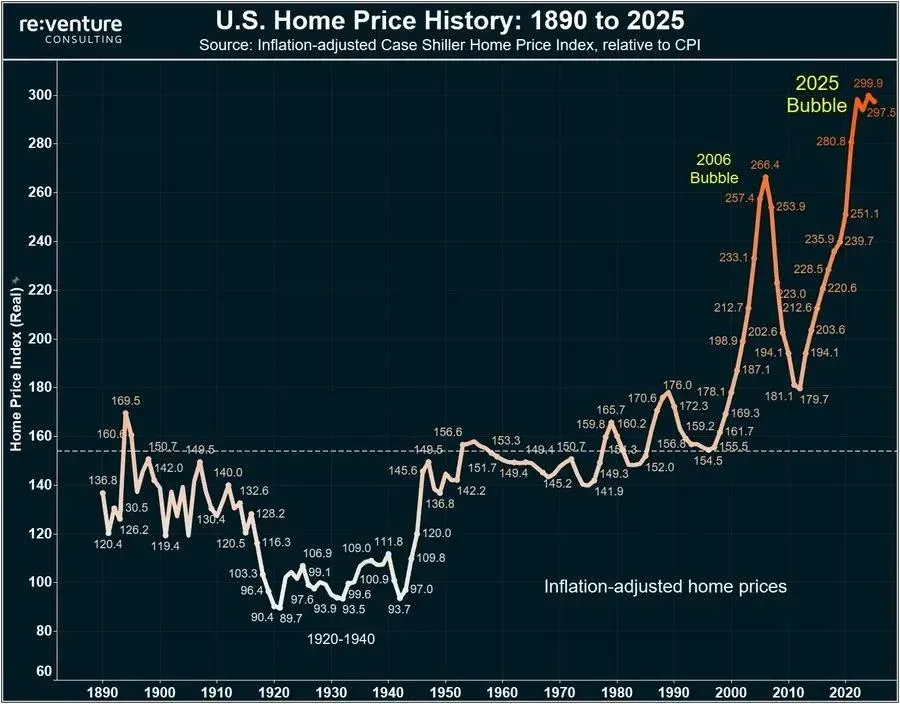
Parts of central and northern Kentucky rapidly, chaotically urbanized, particularly Warren, Madison, Scott, and Jessamine County. Appalachian and Delta counties continued to lose population.
New housing construction was haphazard and insufficient. Prices to buy or rent were outside the budget of families rooted in the area. Developers complained about the permitting process. Homelessness grew at an alarming rate.
Residential-only zoning isolated new neighborhood developments from parks, schools, shopping, and city services.
Increasing homelessness and overcrowding resulted from high cost of living, which in turn caused mental illness, chronic disease, substance abuse, and child maltreatment. High cost of living was a central electoral issue everywhere.
Kentucky imprisoned and confined to institutions 40% more people per capita than the US average. 1 in every 50 Kentuckians was imprisoned, on probation, or on parole. There were dozens of urban blocks and small rural areas where more than a million dollars of public money were spent every year to imprison residents. The money could be better spent.
1 in every 100 Kentucky kids were in foster care. Unusually high incidence of child maltreatment and not enough foster families caused a crisis. Many people said they stopped fostering or didn't start because they couldn't find housing with sufficient bedrooms to meet requirements.
Much growth was in unincorporated areas on former agricultural land. It didn't generate enough tax revenue for needed services, in part due to low density.
Massive infrastructure was built for unfinished AI data centers and ICE detention warehouses. "Why not build towns for the new infrastructure to service?"
Pensions were invested in risky hedge funds designed for short-term returns, which underperformed even index funds and carried high fees. After the AI crash, a safer haven was sought.
Post-WWII, the US built low-density, car-centric, land-intensive suburbs. In the 1950s-1980s, some countries accumulated slums around cities. Others built high-density walkable suburban towns: French banlieue, Soviet microraion, Chinese xaioqu. The new towns had excellent public services, schools, and parks, but the housing would be considered substandard by middle-class Kentuckians.
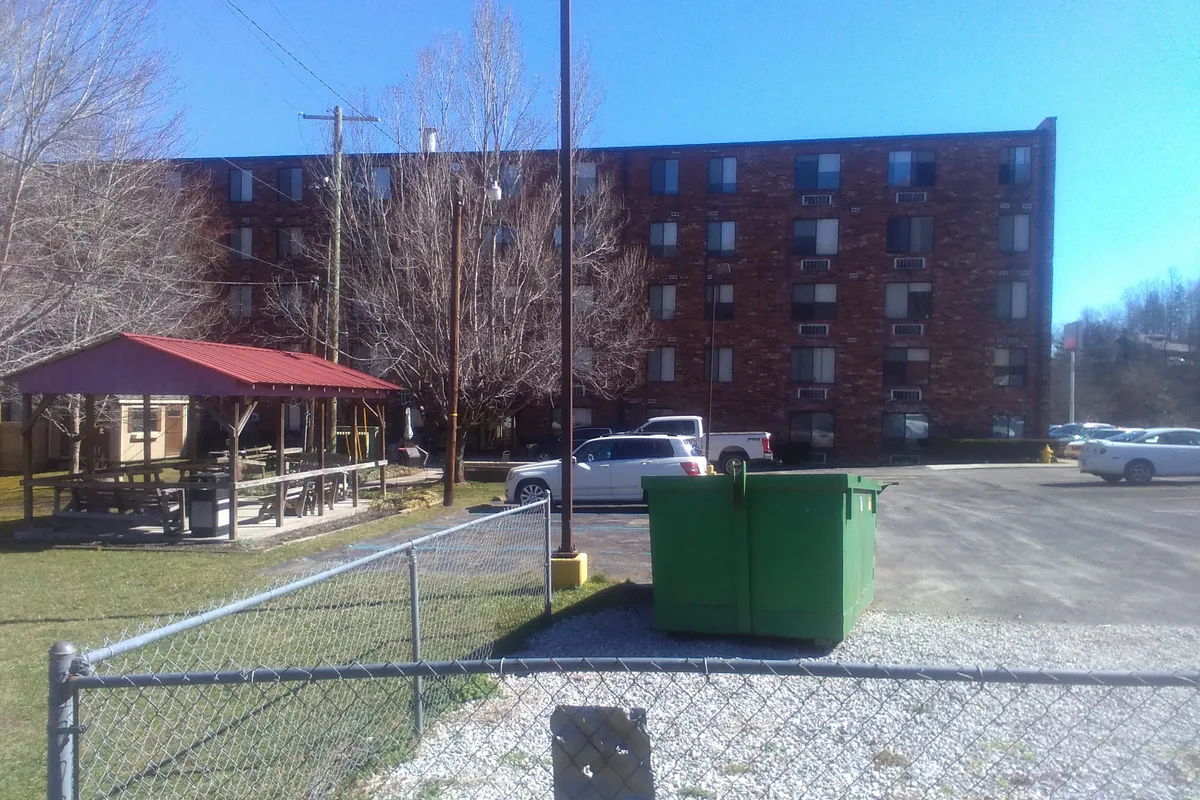
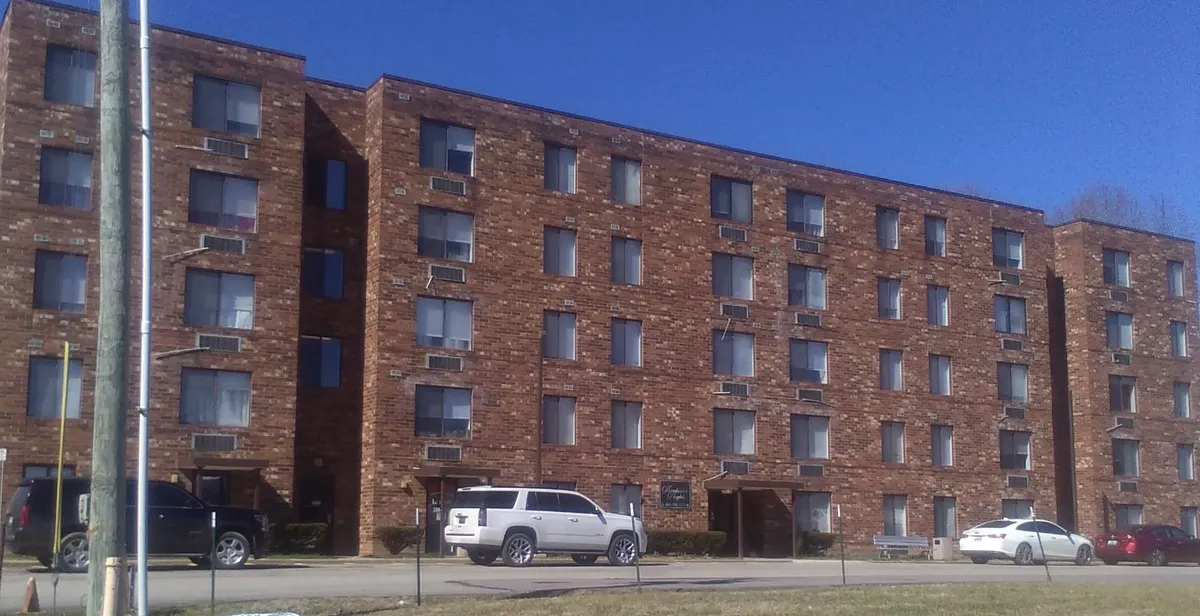
Four and five story apartment buildings similar to Soviet Khrushchovka were constructed in Kentucky in the 1970s, particularly by housing authorities, but restricted to low-income residents and often geographically segregated from schools, parks, and shops. In the century of the rubber tire Kentucky built no dense, walkable new towns.
Feasibility study
Kentucky felt its way toward improving on the three middle-income countries that prevented slums. The cabinet, legislative, Area Development Corporation, and fiscal court planning bodies studied the three styles of new town, as bases to iterate on.
Kentucky cities, counties, and public universities held community-engagement forums around oversized maps of the area to locate assets, study what residents liked and didn't like about their areas, and collect residents' aspirations, hopes, and concerns.
This was when opposition began to emerge, particularly from cattle-farmers, large landlords, and some homeowners. They complained of central planning. They also highlighted a central issue: housing can be affordable or a good investment, but not both. A growing stock of housing risks decreasing the value of existing homes, hurting investments of homeowners and large landlords.
The machinery of planning continued to turn. Cabinet offices tasked demographers to study age-stratified actual and projected population movements, engineers to study transportation, electrical, water, sewerage, and storm runoff capacity, bedrock and soil types, flood and tornado risk, and other indexes of places where the smallest investment would yield the best town.
The legislature and fiscal courts studied incentives, cultivated relationships with builders, considered financing, and studied whether regulations needed to be changed or written.
The intersection of infrastructure, demographics, and the regulatory environment suggested six new town locations. Cities and counties considered for the projects competed to land the first, pilot, new town. Once sites were proposed, opposition emerged in earnest.
Planning
The plan was as follows:
- A new town needed to immediately, upon completion, support a high-density, walkable town center housing at least 2,000 people and meeting all possible non-employment needs in an average week.1
- It must grow rapidly to support a population big enough to attract a grocery store. It must have room to grow to a population of about 10,000.
- The new town must minimize impact on water, gas, and power infrastructure through resilience measures, be liveable during cold-weather and hot-weather service outages, and survive 50-year predicted disasters.
- There must be sufficient housing for each stratum of the region's income distribution.
- Supply chains and labor must be local to the region, or at least the state, enough to drive economic development.
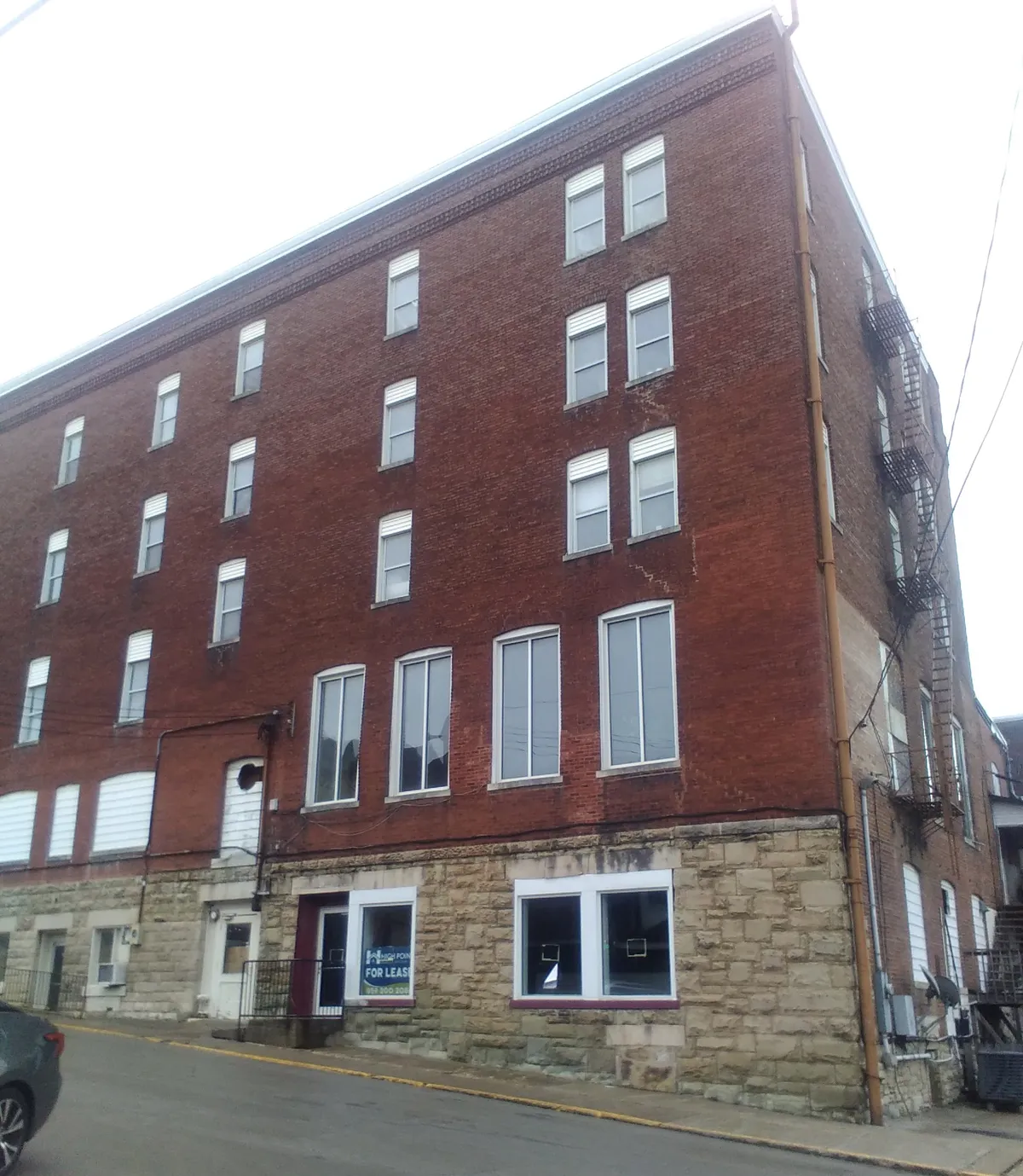
- New buildings must match the character of the area.
Political jousting around this definion of a new town hinged on whether this was authoritarian central planning. Supporters of new towns made the compelling point that for years people wanted more, better housing, but the market had been planned by financial speculators, not our democratic system. "If we don't plan it, it will still be planned, just not by or for us." The Global Financial Crisis, and the AI market crash and 2026 energy crisis were what happens when the economy's planned by speculators. "We deserve better. Damn it, we just need somewhere to live."
Financing
The Treasurer pulled state employee pensions from hedge funds and private equity and invested them in long-term development bonds to finance approved residential, commercial, and manufacturing development.2
Areas designated for new towns were required to tax land instead of improvements to drive density.3 Provision was made for agricultural or historic exemptions to preserve the character of the area, based on community-engagement planning meetings.
Governance
New towns were incorporated. They were governed by a caretaker (generally city or county). Revenues were earmarked for it til the election after the population passed 5,000. Then the town would elect a city government.
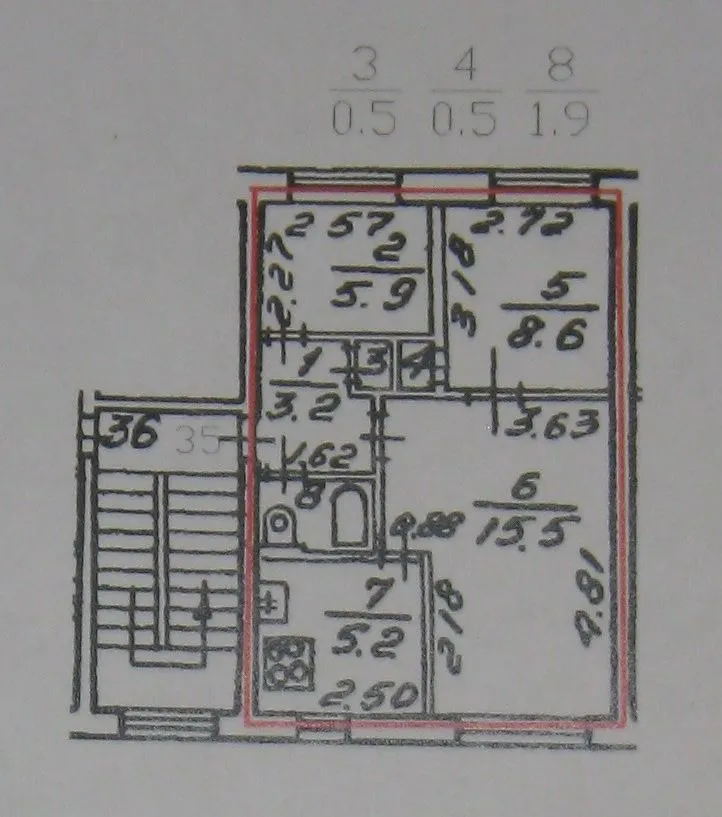
A master plan governed construction of new town centers, with provision for parks, schools and daycares, churches, medical care, government buildings, groceries and other stores, farmer's and flea markets, repair mall, bakery, butcher, and coworking or office space. Parking was not required to be immediately adjacent to residences or businesses, except handicap spaces.4 Apartment buildings were not required to have center hallways and two staircase exits like standard 5-over-1 buildings, but preferred to have doors that open directly to staircase landings.5 Fire and emergency services must be sufficient for five-story buildings, though many apartments were 3-4 stories.
An architectural pattern book was prepared for the region of a new town before it was built, with guidance on building shapes, ornamentation, cladding, and colors, building orientation in relation to sunlight and prevailing winds, and interior plans and ornamentation. The pattern book allowed for architectural choice, but provided residents with a baseline of quality and sense of place, and provided businesses meeting supply-chain needs with manufacturing specifications. The pattern book and new town building code (adapted from a model code) also established efficiency, outage livability, and 50-year disaster survivability baselines.6
The pilot
The Allen Company got the contract to build roads, EKPC got the contract to build electrical infrastructure, and the usual suspects got other municipal infrastructure contracts. Once ground was broken at the pilot site in Kingston, Madison County, a local community group protested and some propertyholders refused to sell. They could not be forced to sell for building construction, but some lost portions of their property to eminent domain for infrastructure required in the master plan.
Jokes about "socialism with Kentucky characteristics" stopped being funny as construction proceded with contractor cost overruns and extended work delays. Public officials worked overtime, hearing public concerns and explaining as clearly as possible, "Construction is an ecosystem, and ours has been hollowed out over the past generation. Rebuilding our American ability to build is tough, but we're Kentucky." The effect of these speeches varied.
The new jokes were about "building an airplane after it's already took off." Inspectors General didn't have the budget to audit all the overcharging contractors. Some buildings changed hands three times before completion. The industrial park got a new tenant making dimensional lumber, insulation, or structural insulated concrete panels, but also got some robot-AI building startup that looted the public purse and went bankrupt, leaving a vacant highly-specialized fake robot factory. There were labor bottlenecks in some of the trades, and a battle over whether labor in trades had to be union.
Whitney McKnight printed an interview with unnamed sheetrockers and painters alleging cost-cutting malpractice in two apartment buildings. The fiscal court was confronted by a resident and demanded a walkthrough, but was beat to it by a reporter with a hidden camera. The general contractor was fired, and months passed before construction restarted. Save-a-Lot pulled out of the grocery store contract because the population wasn't in place, leaving the fiscal court looking for a new tenant for the grocery store that had been built.
Despite scandal after scandal, buildings were finished. People moved in. Combs and several other local landlords owned more than half the buildings. A big national absentee landlord like Greystar or Cortland owned a quarter of the buildings. One building was a co-op or condos owned by residents.

What came next
"What went wrong with new towns," was a common think-piece headline as Kingston quietly started to make itself into a decent place. Parks were good and close. The community center's senior and youth programming were good. Telecommuters appreciated the coworking space. Everybody appreciated the affordability. An IGA grocery store opened. A tire shop opened. Residents complained there wasn't enough parking. P. Cab opened a station and Foothills Express began limited, insufficient bus service. A bike and e-bike store opened and closed. The municipal government was elected.
The new town idea fell out of favor at a statewide level even as Kingston thrived. It worked with Richmond, Berea, and London on industrial development and bringing in jobs. Kentucky Magazine ran a piece on "The best (only) new town in Kentucky." It was reprinted in the Lantern. TV news crews used it to pad evening broadcasts. Mayors and judge executives who continued to face housing crunches visited.
The housing summit reconvened. They invited state legislators and the governor.
This story is released into the public domain. It is only as true as you make it.
Walkability became a big priority after the 2026 energy crisis. At a planning session, a man who lived south of Lawrenceburg said, "We're trapped in our house when gas goes over $6.00 a gallon. Before we start the car we have to do the math if, you know, we'll make enough money to replace what we burn."↩
New towns or other major residential and manufacturing development require a big up-front investment, and pay off over decades. Pension funds don't need short-term returns. They are a big pile of money that can afford to invest in the next decade instead of the next quarter.↩
Tying taxation to land instead of improvements means a parking lot pays as much as a 50-unit apartment building. So which gets built? It also discourages railroads from tearing up track to decrease their property tax.↩
Adjacent parking requirements produce sprawl, unwalkable neighborhoods, density too low for cost-effective public transport, higher costs of construction, and higher summer surface temperatures.↩
Neighbors who share a stairwell are significantly more likely to know each other than neighbors who share a center hallway. Buildings without center hallways cost less to build, waste less space, and allow apartments to be daylighted and ventilated on both sides of the building. Staircases can be reasonably fireproofed, especially in buildings under 5 stories. This is a zoning issue.↩
The pattern book saved contractors significant sums of money. They assembled the building blocks of already-permitted studio, 1, 2, and 3-bedroom, and luxury apartments into an already-permitted building envelope. They had less design, architecture, and engineering costs, and permitting was considerably eased. They were expected to pass along savings gained from public investment.↩